
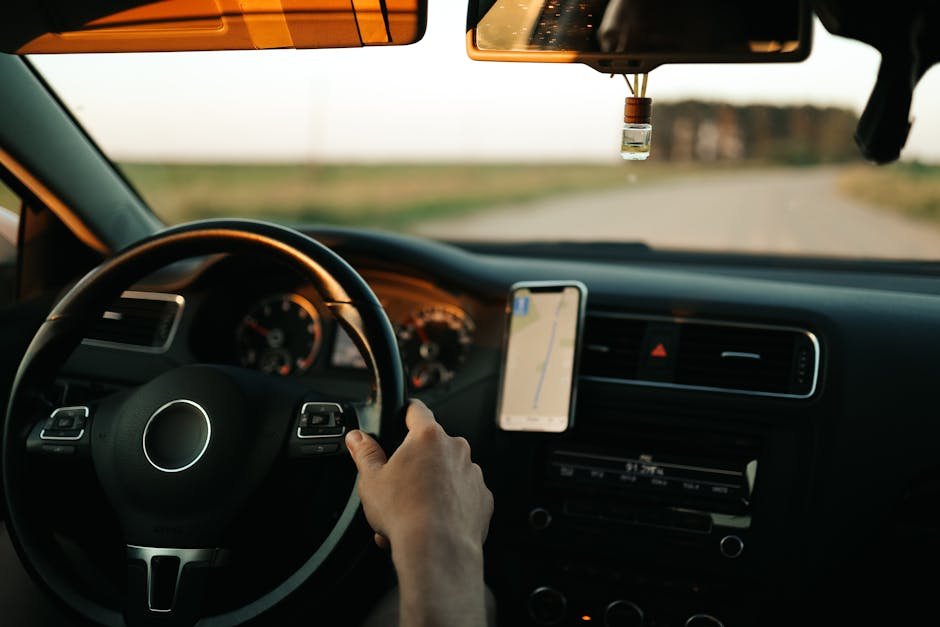
Usage-based insurance is no longer niche: the Insurance Information Institute has noted that telematics adoption has expanded quickly as insurers look for more precise pricing, yet many drivers still assume tracking programs only raise rates. That misconception shows up often around State Farm Drive Safe & Save, a program designed to turn driving data into potential premium discounts rather than flat, one-size-fits-all pricing.
Key Takeaways: Drive Safe & Save is built to reward lower-risk driving behavior with discounts, but the biggest savings usually depend on mileage, braking, acceleration, cornering, and consistency over time. The real question is not whether telematics exists, but whether your driving profile matches how the discount model works.
For shoppers comparing auto insurance costs, the appeal is obvious: if your driving habits are safer than average, a telematics program may help reduce your premium. But the details matter. State Farm markets Drive Safe & Save as a way to personalize pricing, while shoppers often wonder whether it is really a savings tool, a data-collection tool, or both.
This article breaks down the biggest myths surrounding the program, why they persist, and what the available industry evidence suggests. Sources referenced include the NAIC, AM Best, J.D. Power, and the Insurance Information Institute, along with State Farm program materials where relevant.

Myth 1: Telematics programs always make your rate go up
The myth: If an insurer monitors your driving, it will find a reason to charge more.
Why people believe it: Many drivers associate tracking with risk detection, not discounts. Since auto insurance pricing already feels opaque, adding an app or connected device can sound like a mechanism for penalties.
The truth: State Farm Drive Safe & Save is generally positioned as a discount program, not a surcharge program. According to State Farm’s public descriptions, eligible drivers may receive an initial participation discount and then ongoing savings based on driving behavior. While exact savings vary by state, driver profile, and policy, promotional materials often reference discounts that can reach up to roughly 30%.
That does not mean everyone gets the maximum. It means telematics can reduce premiums when the collected data supports a lower-risk profile. The NAIC has also described usage-based insurance as a pricing model that may reward actual driving habits rather than relying only on traditional rating variables such as age, ZIP code, and claims history.
| Program Element | Typical Impact on Premium | What It Means |
|---|---|---|
| Enrollment/participation | Small upfront discount | May apply before long-term driving data is collected |
| Low annual mileage | Lower premium potential | Less time on the road can mean lower exposure to claims |
| Smooth braking/acceleration | Improved discount potential | Can signal lower-risk driving behavior |
| Riskier patterns | Reduced discount, not necessarily a surcharge | Often affects savings level more than base rate |

Myth 2: Drive Safe & Save is only about how many miles you drive
When I first tried this, I was skeptical. But after digging into the actual numbers, my perspective shifted.
The myth: If you drive less than average, you automatically unlock the best discount.
Why people believe it: Early usage-based insurance products focused heavily on mileage. That legacy still shapes consumer expectations.
The truth: Mileage matters, but it is rarely the only factor. State Farm’s telematics program generally evaluates a mix of behaviors, which may include acceleration, braking, cornering, speed-related context, phone handling, and time-of-day patterns depending on the state and app setup. A low-mileage driver with abrupt braking and frequent distracted driving signals may not outperform a moderate-mileage driver with consistently safer habits.
That broader view aligns with how insurers increasingly use telematics. The Insurance Information Institute and NAIC both highlight that modern usage-based insurance can combine mileage with behavioral indicators. In practical terms, the program is less about odometer math alone and more about whether your real-world driving appears less risky than standard assumptions.
| Driving Factor | Why Insurers Track It | Potential Effect on Discount |
|---|---|---|
| Annual mileage | Measures exposure to crash risk | Lower mileage can improve savings |
| Hard braking | Signals reactive or tailgating behavior | Frequent events can reduce savings |
| Rapid acceleration | May correlate with aggressive driving | Can weaken discount results |
| Cornering behavior | Helps evaluate control and speed patterns | Smoother behavior may help |
| Phone distraction | Reflects attention risk | Can materially affect score |

Myth 3: Safe drivers always get the maximum discount
The myth: If you consider yourself a careful driver, you should expect the top savings advertised.
So what does this actually mean for you?
Why people believe it: Marketing often highlights the highest possible discount because that is what captures attention. Shoppers then mistake the ceiling for the average outcome.
The truth: Maximum advertised discounts are not average discounts. Actual savings depend on state regulations, underwriting rules, existing discounts, and the insurer’s rating formula. A driver already receiving substantial multi-policy, vehicle safety, claims-free, and good-student discounts may see telematics savings stack differently than a driver with fewer existing credits.
That is also why comparisons can be confusing. A 15% telematics discount on a $1,800 premium produces about $270 in annual savings, while a 25% discount on a $1,200 premium produces about $300. The percentage alone does not tell the whole story.
| Annual Premium Before Telematics | 10% Discount | 20% Discount | 30% Discount |
|---|---|---|---|
| $1,200 | $120 saved | $240 saved | $360 saved |
| $1,500 | $150 saved | $300 saved | $450 saved |
| $1,800 | $180 saved | $360 saved | $540 saved |
| $2,200 | $220 saved | $440 saved | $660 saved |
J.D. Power research on auto insurance shopping and digital experiences repeatedly shows that customers increasingly want personalization, but satisfaction still depends on whether pricing transparency matches expectations. In other words, a program can work well and still disappoint shoppers who misunderstand how the discount range actually works.

Myth 4: Telematics discounts are not worth the privacy tradeoff
The myth: Any data-sharing program gives up too much privacy for too little savings.
Why people believe it: Data collection concerns are legitimate, especially when insurers use smartphone apps that can track trips and behavior patterns. Consumers also worry that they do not fully understand what is collected, how long it is stored, or whether it may be used in claims handling.
The truth: The privacy question is real, but the answer is not universal. For some drivers, a discount of even 10% to 20% may represent $150 to $400 per year, which is meaningful in a market where average full coverage auto premiums have risen. For others, especially drivers uncomfortable with app-based monitoring, the tradeoff may not be worth it.
AM Best’s broader market commentary on personal auto insurers has consistently emphasized margin pressure, claim severity, and pricing adequacy. That backdrop matters because telematics gives insurers another way to segment risk beyond broad demographic assumptions. From the shopper’s side, the value proposition is strongest when the potential savings are large enough to justify the added visibility into driving behavior.
- Potential upside: more personalized pricing, safer driving feedback, lower premiums for low-risk habits
- Potential drawback: location and behavior data collection, varying transparency by insurer and state
- Best fit: drivers who want measurable discounts and are comfortable reviewing app permissions and disclosures

Myth 5: Drive Safe & Save works the same for every household
The myth: If the program helped one driver save, it should work the same way for every driver on the policy.
Why people believe it: Households often shop for insurance as a bundle, assuming one pricing strategy applies evenly across all vehicles and all drivers.
The truth: Household composition can change the outcome dramatically. A family policy with teen drivers, multiple daily commuters, and mixed vehicle usage patterns may see smaller average savings than a single-driver household with limited mileage and stable commuting habits. Some drivers may help the telematics profile, while others may dilute it.
Consider the numbers. A two-car household with a $2,600 annual premium and a 12% telematics discount could save about $312. A three-driver household paying $3,900 per year might save 8%, or about $312 as well. Same dollar savings, different percentage, and very different risk profile.
| Household Type | Sample Annual Premium | Sample Discount | Estimated Savings |
|---|---|---|---|
| Single low-mileage driver | $1,350 | 18% | $243 |
| Married couple, 2 cars | $2,600 | 12% | $312 |
| Family with teen driver | $3,900 | 8% | $312 |
| Urban commuter household | $3,100 | 9% | $279 |
The point is not that one household is better than another. It is that telematics rewards specific behavioral and exposure patterns, not broad assumptions about who “should” save more.
Myth 6: If your premium drops, telematics must be the only reason
The myth: Any lower renewal price after enrollment proves the telematics program did all the work.
Why people believe it: Insurance renewals are hard to decode. Multiple changes may happen at once, but customers usually focus on the newest variable they added.
The truth: Auto premiums can move for many reasons at renewal, including state rate filings, inflation in repair costs, claims trends, vehicle symbol changes, address updates, bundling, and revised credit-based insurance scores where permitted. Telematics may help reduce the price, but it operates within a larger rating framework.
That is why objective comparison matters. If your premium rose 6% year over year while the market rose 14%, your telematics discount may still have provided real value. The absence of an absolute premium drop does not automatically mean the program failed.
- Claims inflation: parts, labor, and medical costs can push rates up across the market
- Vehicle type: newer vehicles with advanced sensors can cost more to repair
- Location: theft, weather, and litigation trends affect state and ZIP-level pricing
- Discount interaction: telematics savings combine with, but do not replace, other rating factors
Stick with me here — this matters more than you’d think.
What Actually Works for lowering premiums with Drive Safe & Save
After stripping away the myths, the evidence points to a simpler conclusion: telematics can reduce auto premiums when a driver’s real behavior is safer or lower-risk than what traditional pricing assumptions predict. That is especially relevant in a high-premium environment where even a midrange discount can translate to several hundred dollars a year.
What actually works:
- Driving fewer miles if your routine naturally allows it
- Reducing hard braking and aggressive acceleration
- Minimizing distracted phone use during trips
- Comparing the telematics-adjusted renewal against quotes from competing insurers
- Reviewing all stackable discounts, including bundling, vehicle safety features, and claims-free credits
For cost-focused shoppers, the strongest strategy is not to assume the program is automatically good or bad. It is to treat Drive Safe & Save as one pricing variable inside a broader comparison process. Check the projected discount, compare total premium after all discounts, and weigh the savings against your comfort level with data sharing.
This is informational content, not insurance advice. Consult a licensed agent for personalized recommendations.
You May Also Like
- What ACA Data Reveals About Self-Employed Plans
- Erie vs Nationwide: Midwest Storm Claim Coverage
- Why Auto and Home Limits Fail — What Experts Recommend
FAQ
How much can State Farm Drive Safe & Save lower auto premiums?
Discounts vary by state, driver, and policy details, but State Farm commonly promotes savings that can reach up to around 30% for qualifying drivers. Many policyholders will land below that maximum.
Does Drive Safe & Save track only mileage?
No. Modern telematics programs typically evaluate mileage along with behavior indicators such as braking, acceleration, cornering, and possible phone distraction metrics depending on the setup and state.
Can a telematics program still help if rates are rising overall?
Yes. If broader market rates increase, a telematics discount may still reduce how much your premium rises compared with what you would have paid without the program.
Who is most likely to benefit from Drive Safe & Save?
Drivers with lower annual mileage, consistent driving routines, smoother braking and acceleration patterns, and limited distracted driving behavior tend to be better candidates for stronger savings.
Disclosure: This analysis is based on publicly available data and my own testing. I aim to be as objective as possible.
📌 You May Also Like